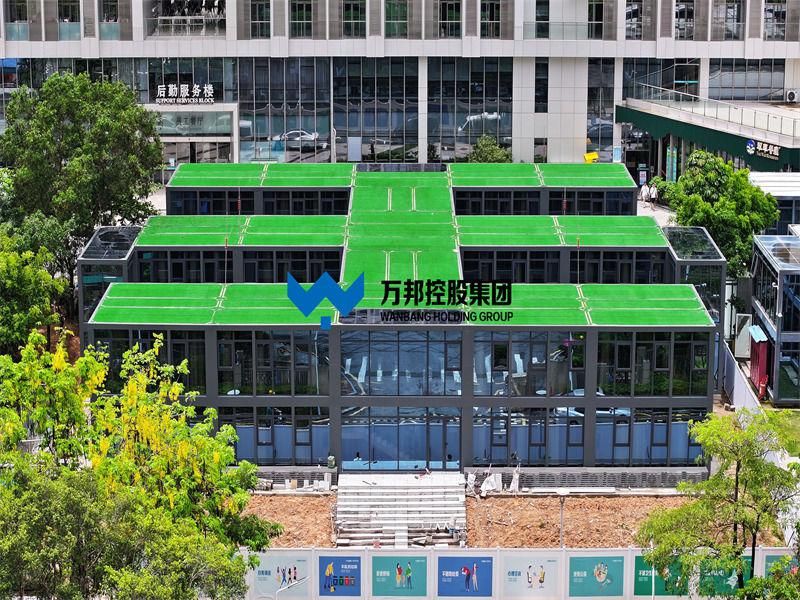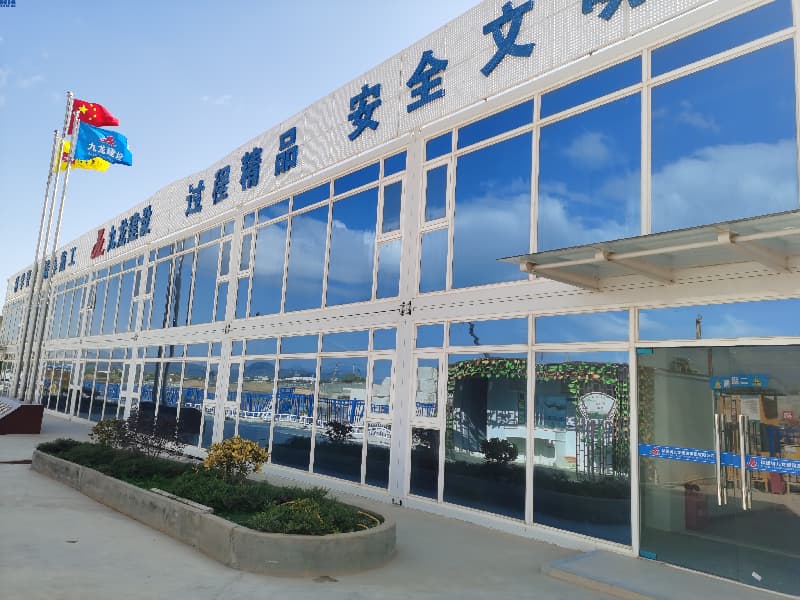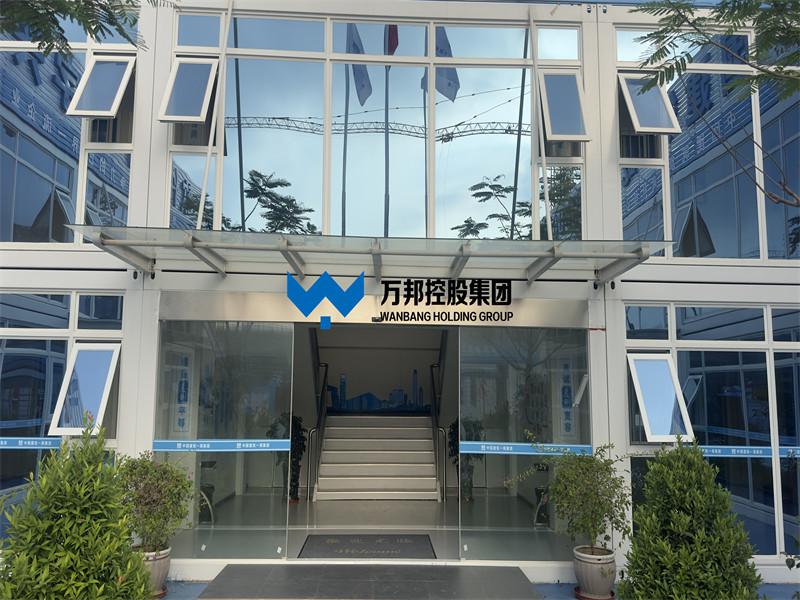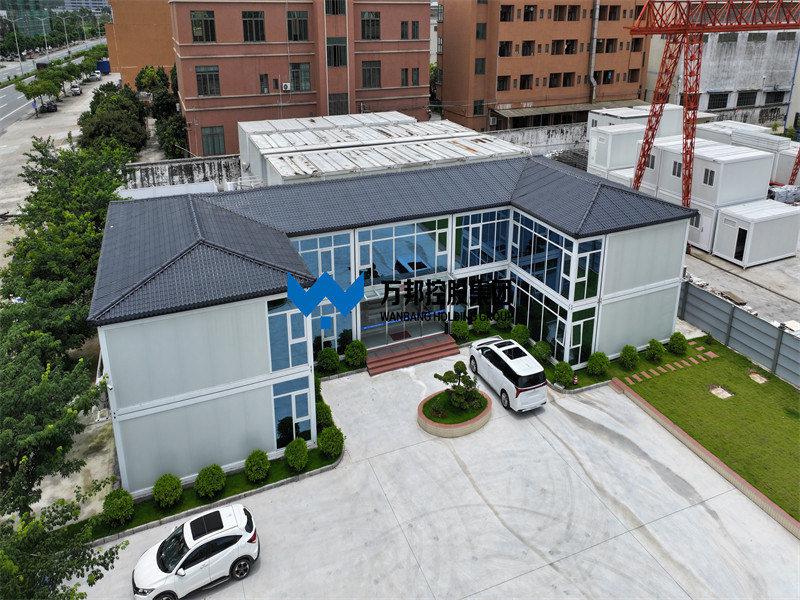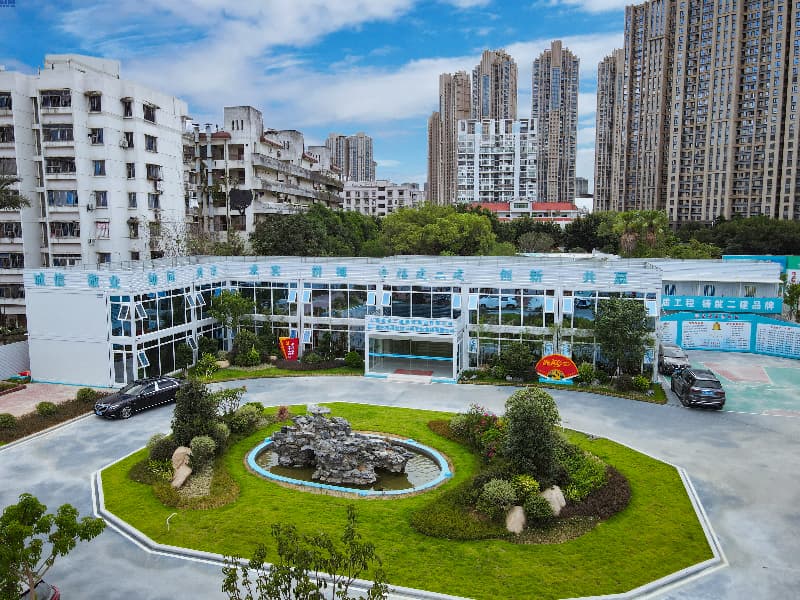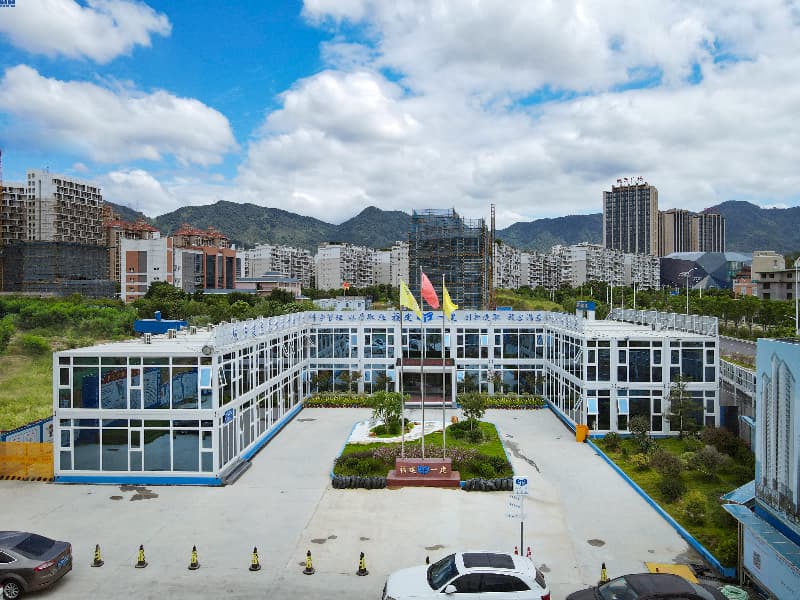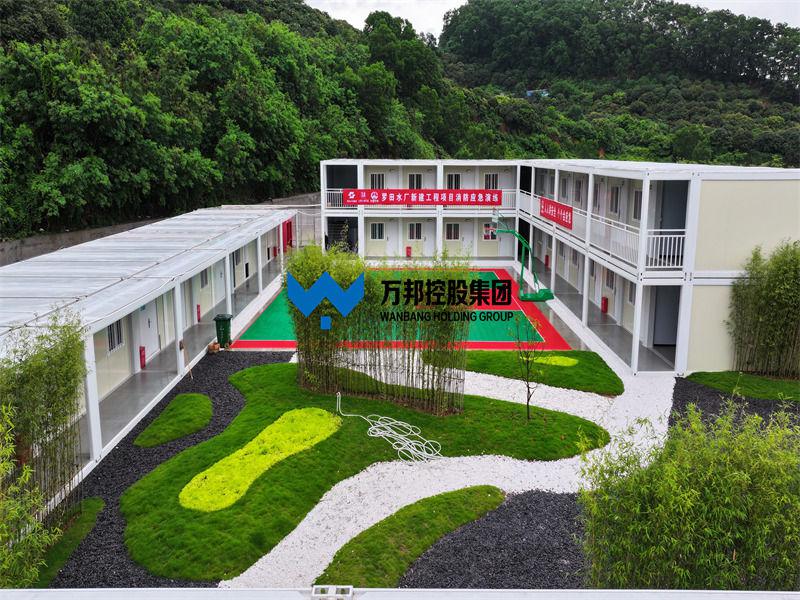
The project is a camp for a power transmission scheme in the Atacama Desert, Chile, built from 150 modular housing units. It is one of five overseas camp projects in the Wanbang project record, and every figure below is taken from that record.
| Item | Project record |
|---|---|
| Location | Atacama Desert, Chile |
| Project type | Camp for a power transmission scheme |
| Total units | 150 integrated housing units |
| Functions delivered | Offices, accommodation, canteen and supporting functional zones |
| Site conditions | High altitude: extreme daily temperature swing, intense ultraviolet radiation and strong winds |
| Factory prefabrication rate | Above 90% for the custom quick-assembly flat-pack units |
The Atacama is a high-altitude desert, and its conditions are permanent rather than seasonal. The gap between day and night temperature is extreme, ultraviolet radiation is intense, and strong wind is a design condition the camp lives with for its whole service life rather than an occasional event. A unit that only insulates, or only resists wind, is the wrong unit for this site.
That is why the buildings specified for this project had to deliver thermal insulation and wind resistance together. Desert heat loads the envelope from outside through the day, the night-time drop loads it from the other direction, and the wind adds a continuous structural demand on top of both. These requirements all pull on the same parts of the building — the wall system, the joints and the fixings — which is what makes an Atacama camp a different specification from a humid coastal one.
Chile, Atacama Desert — 150 integrated housing units for a power transmission project, delivered at a factory prefabrication rate above 90%.
Prefabrication rate measures how much of the building is finished before it leaves the factory. On this project the figure was above 90% for the custom quick-assembly flat-pack units, which leaves only simple assembly work to be done on site.
What that really produces is a transfer of work rather than a reduction in it. Panels, frames, flooring and building services are completed under factory conditions, where the tooling and the quality checks already exist, and what remains at the site is a short sequence of connections. That is what shortens the construction timeline, and it is also what makes the camp far less dependent on the labour and lifting equipment available at a remote desert location. The units themselves come from the flat-pack container house platform, which is the base for this class of camp.
The project record states a 48-hour rapid deployment response, set against the project's urgent schedule requirements. It is worth being precise about what that figure describes. It is a response commitment — how quickly the project could be mobilised and moved into position against a pressing programme — and not a claim that all 150 units were assembled on site inside two days.
A commitment at that level is only available when the buildings are already substantially finished in the factory. Speed on site is bought earlier in the process: the unit arrives complete enough to be placed and connected, so the critical path becomes shipping and mobilisation rather than construction. Add a site with limited water, limited power and long transport distances, and the value of that shift becomes obvious.
150 units is smaller than the largest camps in the record, but it is still a settlement rather than an order of buildings. The project delivered offices, accommodation, a canteen and supporting functional zones — four different jobs, each with its own requirements.
The working end of the camp. Administration and site office space, finished to a standard that supports daily reporting, drawings and meetings rather than providing shelter alone.
The living end. Quarters for the transmission crew, a canteen and the supporting functional zones that keep a remote camp running between shifts.
Planning a camp in two ends like this is what allows one unit platform to serve both. Every unit type in the container-based range shares the same 6,055 mm × 2,990 mm × 2,896 mm footprint, so the blocks sit on a single planning grid and can be mixed inside one layout instead of being designed as separate compounds.
The unit is the same modular platform used across Wanbang camps, but in a desert the parts that carry the insulation and the structural load are the ones that decide how the camp performs. The documented specification is set out below.
| Component | What the product documentation states |
|---|---|
| Wall system | Colour-steel rock wool sandwich panels, described as combining thermal insulation with fire and moisture resistance |
| Flooring | Cement fibre board with PVC finish, selected for load-bearing capacity, fire resistance and slip resistance |
| Footprint | 6,055 mm × 2,990 mm × 2,896 mm, shared across the container-based range |
| Fire performance | Class A fire-resistant rock wool core |
| Stated service life and structural grades | 10–15 years, with seismic intensity grade 8 and typhoon resistance grade 10 |
| Services and finish | Concealed wiring, suspended ceilings, premium doors and a centralised internal drainage system; baked-enamel steel finish documented as fade-resistant for up to five years |
Read as a group, these are envelope decisions rather than decorative ones. The wall system does the thermal and moisture work, the floor carries the load and the fire performance, and the steel finish is the part that has to hold up under intense ultraviolet exposure. They are also the items most worth asking about in writing when a camp is being specified, because they are the ones that are difficult and expensive to change once the units have shipped.
Yes, and on this project reusability is part of the specification rather than an afterthought. The record notes that the modular materials used on the Atacama camp can be reused, and links that directly to an environmentally friendly, low-carbon outcome for the project.
Reuse matters more on a transmission scheme than on a permanent industrial plant, because the camp belongs to the construction programme rather than to the site. When the programme moves on, the units can be recovered, transported and re-erected at the next location instead of being demolished and rebuilt from new material — which is a different proposition from a fixed building, where the reuse decision has usually been made for you before the first drawing.
The project is in the Atacama Desert, Chile, and serves as a camp for a power transmission scheme. It provides offices, accommodation, a canteen and supporting functional zones for the people working on the project.
The project record states 150 integrated housing units.
Above 90% for the custom quick-assembly flat-pack units, which leaves only simple on-site assembly and sharply shortens the construction timeline.
No. The record describes a 48-hour rapid deployment response against the project's urgent schedule requirements — a mobilisation and response commitment, not the assembly of the full 150-unit camp inside two days. The reason that level of response is possible is the prefabrication rate: most of the building is already finished before it ships.


 IPv6 SUPORTADO POR REDE
Hi! Click one of our members below to chat on
 Português
 English
 Français
 Deutsch
 Русский
 Italiano
 Español
 Türk
Türk Ελληνικά
 Indonesia
 عربي
عربي