
The quotation looks professional: clean drawings, a certification collage, photos of finished units. But one question decides whether this order arrives as promised or turns into a six-week dispute: who actually builds the unit? In the container house market, factories and trading companies sell on the same B2B platforms, show similar galleries, and quote in similar formats. The difference surfaces later - in price markups, in whether a technical change ever reaches the production line, and in who answers the phone when a batch problem appears on site.
You can separate the two reliably within one or two exchanges, before any money moves. Six checks do most of the work: read the business license properly, match the registered address to a live video audit, ask who inspects what and when, test how engineering changes are handled, check whose name carries the certificates, and demand batch-level evidence instead of adjectives. Each check takes minutes; together they remove most of the risk of buying through a middleman who cannot control what ships.
A registered Chinese company can be checked in minutes, before your first call. The business license shows three things a buyer cares about: registered capital, business scope, and registered address. A manufacturer's scope includes production or manufacturing of steel structures or building materials, and the address points to an industrial zone. A trading company's scope lists sales and import-export, often with a registered capital that could not fund one month of steel consumption at the scale it claims to sell.
For comparison, Wanbang discloses registered capital of RMB 30 million and operates 5 production bases totaling 120,000+ m² under 7 subsidiary companies - figures a buyer can cross-check against China's national enterprise credit database before deciding who to talk to.
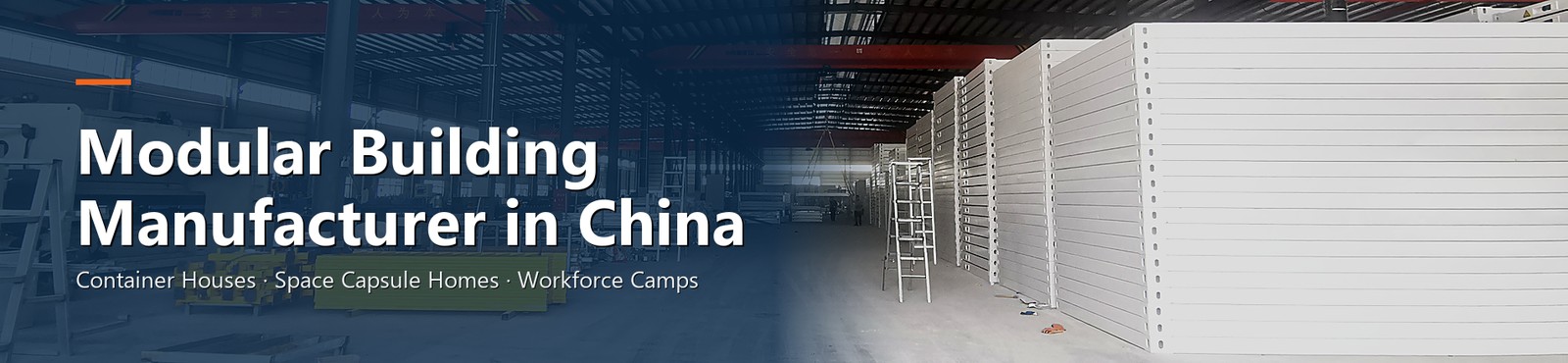
Photos can be borrowed; a live video call during working hours cannot. Ask for an unscheduled walk through the line: steel cutting, frame welding, panel laminating, and the yard of finished units. A factory with real capacity will show moving production, not a showroom loop. Wanbang's project documentation states its model plainly - in-house manufacturing, no outsourcing, full quality control at every stage - which is exactly the claim a video audit is designed to test.
Red flag: the contact agrees to video, but the background is an office, the call happens away from machinery, or every production shot comes from a stock gallery.
Quality control is where the two business models differ most. A factory that controls its own line can name its checkpoints: incoming materials accepted or rejected at goods-in (IQC), an independent in-process check on the line (IPQC), and a finished-product inspection before storage (FQC). The test question is simple: what is inspected during production, and what is inspected before packing? A supplier that can only describe a final visual check will not catch welding or sealing problems that appear on site weeks later.
Wanbang documents inspection at each production stage - incoming steel and panels, in-process checks by staff who did not build the unit, and finished-unit testing with batch traceability.
Real manufacturers run OEM and ODM work: custom layouts, finishes and specifications built to the buyer's drawings, with engineers who redraw and re-check the structure. Ask a concrete question: if the window positions move and the insulation thickness increases, who redraws the panel cut list, and who re-verifies the structure? A factory answers with a process - drawings, confirmation, updated BOM. A middleman answers that the factory needs to be asked, which tells you exactly where you sit in the chain.
ISO 9001, ISO 14001, ISO 45001 and CE documents should name the manufacturing entity, not a related sales office. Check the scope and validity date, and verify the registration wherever the issuing body allows it. A certificate in the right name with a clear scope is a strong factory signal; a collage of certificates with mismatched names is a question you should resolve before the deposit leaves your account.
A factory that controls production also controls evidence: batch traceability from raw material to finished unit, inspection reports that travel with the goods, and a packing and container loading plan for every order. Ask for one sample inspection report from a previous order - names removed if necessary. Reluctance to show a document you will eventually receive anyway is a red flag in itself.
Verification is not only about who you buy from - it shapes how you pay. Whichever supplier passes the six checks, weight the payment schedule toward delivery milestones instead of the largest share upfront, and attach the evidence trail to those milestones: inspection reports at the in-process and final stages, photos of joint areas and container loading, and the packing plan for each container. A factory that cleared checks 3 and 6 will treat these as routine contract terms; a middleman who resisted check 6 will resist them too. The payment schedule is where verification results become enforceable.
One more expectation to set: a real factory will not be offended by this checklist. In-house manufacturers hear these questions weekly, and Wanbang's documentation addresses them directly - own production bases, in-house manufacturing with no outsourcing, and inspection records available per order. If a supplier treats routine verification as distrust, treat that reaction as information.
| Check | What a real factory shows | What should slow you down |
| Business license | Manufacturing scope, industrial address, capital that matches claimed scale | Trading-only scope, tiny capital, office-tower address |
| Live video audit | Moving production at working hours, on the line | Office background, stock galleries, delays |
| QC ownership | Named checkpoints: IQC, IPQC, FQC | Only "final visual check" |
| Engineering changes | In-house redraw, updated BOM, re-check | "We need to ask the factory" |
| Certificates | ISO/CE in the factory's name, clear scope | Mismatched names, unclear scope |
| Evidence | Batch traceability, inspection reports, loading plan | Refuses samples of routine documents |
Q: Do trading companies always cost more? A: Not always - some quote aggressively to win the order. The deeper issue is that every layer between buyer and production line adds margin somewhere and slows every technical change. Accountability is the bigger risk: if a specification fails on site, the party who controls production must be in the conversation.
Q: What is the fastest single check? A: An unscheduled live video audit during working hours. It is cheap, fast, and hard to fake. If a supplier claiming factory-scale output cannot walk you through a working line, the other five checks will not take long either.
Q: Is buying from a trading company always wrong? A: No. For mixed sourcing across unrelated product types, a trading company can be a reasonable coordinator. The risk is technical accountability for engineered products like container houses, where the specification has to survive production, transport and assembly.
Q: Can I visit the factory in person? A: Yes - a manufacturer with nothing to hide treats a visit as a sales asset, not an intrusion. Wanbang's 5 production bases receive buyer visits; when a trip is not practical, an unscheduled live video audit plus third-party inspection rights in the contract cover most of the same ground.
Related reading: How to Choose a Container House Factory in China: 8 Checks Before You Order | How to Verify ISO 9001 Certified Container House Suppliers | Audit our production line on a live video call.


 IPv6 SUPORTADO POR REDE
Hi! Click one of our members below to chat on
 Português
 English
 Français
 Deutsch
 Русский
 Italiano
 Español
 Türk
Türk Ελληνικά
 Indonesia
 عربي
عربي


